John
Hajicek
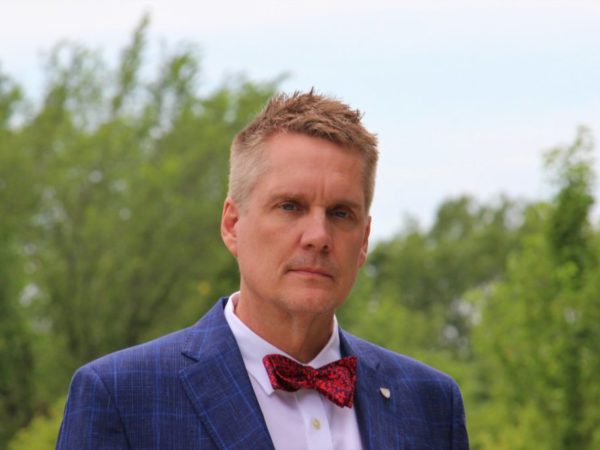
John Hajicek’s life has moved among grand hotels, rare-book rooms, workshops, historic houses, and public meetings. A historian and collector based in Independence, Missouri, he brings to those different settings a practiced interest in how things are made, how institutions work, and what people choose to preserve.
01Roots; work; independence
His beginnings lie in Minnesota, with Bohemian and Luxembourgian family roots. Competitive running, including track and cross-country, belonged to his early life; later interests have ranged from Nordic skiing and Arabian horses to gardening and wilderness edibles. The breadth is characteristic: art and architecture share his attention with photography, history, and the natural world.
Work began with the practical disciplines of hospitality. From an early job washing dishes at the White Fox, he entered the hotel and restaurant world as a young man and learned it through the responsibilities of service, kitchens, and management. That experience gave him a working acquaintance with both the public elegance of a fine establishment and the labor required to sustain it.
02The art of hospitality
His hospitality career included the Playboy Resort at Lake Geneva, the Marc Plaza, and Hyatt Regency hotels in Milwaukee, Tampa, and Kansas City. Across the Hyatt properties, his food-and-beverage work encompassed front- and back-of-house responsibilities and a wide range of dining and service styles. The revolving rooftop restaurants of Milwaukee and Kansas City were among the distinctive settings of that career.
From 1985 to 1988 he managed Tampa’s Tobacco Company; in 1988 he became director of restaurants at the Harbour Island Hotel. His professional experience also included work as a sommelier. Fine dining, wine, and the details of a well-appointed table remain part of a cultivated interest in hospitality that extends well beyond his years in management.
03A craftsman’s eye
Fine woodworking gives practical expression to his interest in form, proportion, materials, and workmanship. His appreciation of furniture, architecture, art, and books is informed by the physical work of making and preserving things. A binding, a cabinet, and a historic room each disclose the choices of the people who made them.
In 1991 he restored an 1840s Mormon stone house at Voree, Wisconsin. His home in Independence brings another set of interests together: American walnut furniture, modern design, paintings, rare books, and historical objects. The result is a living environment shaped by sustained curiosity and personal judgment.
04Economics; liberty; public life
Hajicek’s education includes fifty-one credits in economics, accountancy, and graduate institutional economics, completed with a 4.0 average. His intellectual interests extend through the history of economic thought, finance, political economy, and the institutional arrangements that govern everyday life. He approaches those subjects with the independence of the Chicago tradition and a continuing concern for the consequences of public decisions.
A libertarian, fiscally conservative and socially liberal, he takes an active interest in the affairs of Independence and Jackson County, Missouri. Attendance at city and county meetings gives that interest a practical setting. Economic freedom, property, privacy, religious liberty, and the preservation of historic places are subjects on which he is prepared to speak and act.
His commitment to preservation extends to defending the artifacts themselves. As plaintiff, he prevailed on appeal in 2014 in his effort to preserve and protect original Nauvoo Temple artifacts, carrying his historical stewardship into a determined campaign on behalf of an irreplaceable American heritage.
05A life’s work in history
Since 1990, historical research and collecting have been his full-time work. He has built an extensive library, archive, and museum of rare books, manuscripts, photographs, art, and artifacts; his particular distinction lies in early Mormon material culture. Editors of the Joseph Smith Papers have acknowledged his expertise, and his research has served scholars and private clients across the country.
That work grows from a broader respect for the evidence of individual lives. A family’s papers, an early portrait, a handmade object, or an endangered historic site can each preserve something irreplaceable. Recovering and understanding those things has become a vocation that joins his scholarly interests to his practical habits of work.
His companion biography at Mormonism.com gives the fuller account of the collection, the scholarship, and the books and objects he continues to seek. Here, they take their place within a life that also has room for a workshop, a garden, a carefully set table, and an argument about economic freedom.